Everyone Gets a Top Hat: The Power of Instant Characterization
Have you heard of Caddy Jellyby, Rogue Riderhood, Fanny Squeers, Dick Swiveller, Uriah Heep, Ebeneezer Scrooge? (That last one is a sure giveaway.) These are fictional characters created by the master of names—the king of instant characterization—Charles Dickens.
His names are highly unusual and unique, often chosen not only for delight, but for their usefulness in tagging a character as a fraudster, tightwad, snob, eccentric, and so on. Dickens wrote long books (he was paid by the word) that were serialized. And part of the reason he used memorable names for his characters is so his readers would remember them when they returned to the story in the next issue of the periodical.
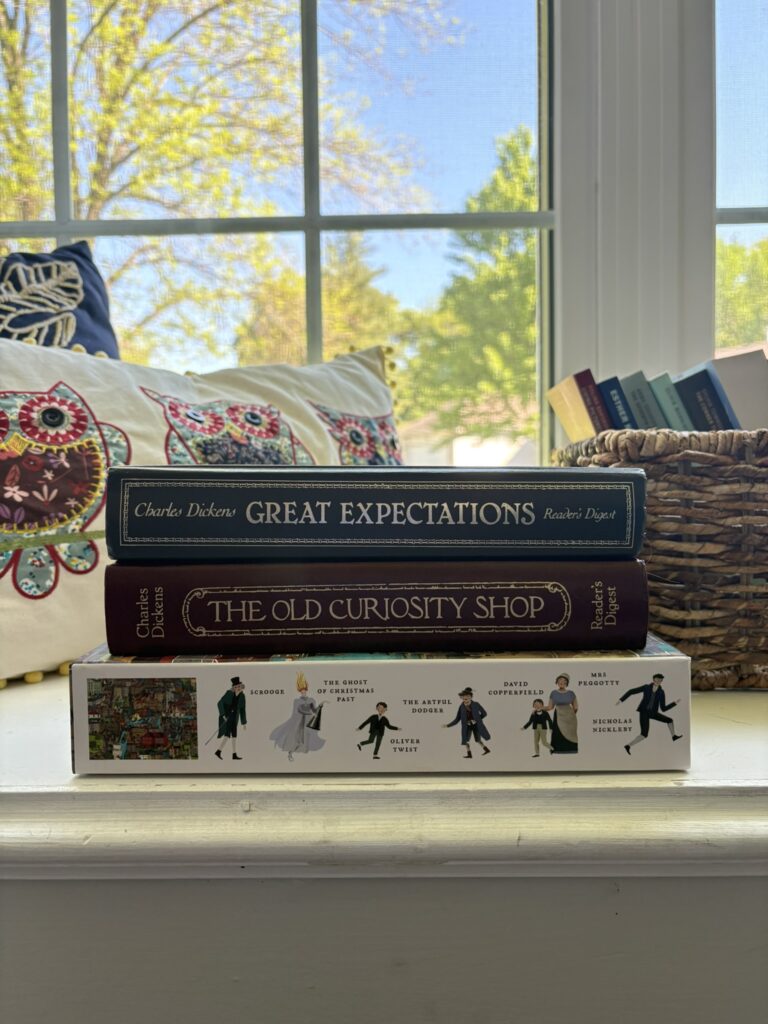
He also famously gave his characters visual tags. One of his most famous characters, The Artful Dodger in Oliver Twist, wears a top hat. So Victorian, so Dickensian. But this particular top hat is too big for the boy. That’s because he’s a child who dresses and acts like an adult. It’s not just a garment of the era, but a visual manifestation of who the character is.
I once heard someone say that “everyone gets a top hat” in a Dickens story. They meant that even a minor character will be described in a notable way. Because Dickens had instant characterization as an objective, of making his characters quickly distinguishable and memorable, their physical attributes frequently symbolized a moral attribute or psychological trait.
Here’s how he describes Mrs. Joe Gargary in Great Expectations, a character known for her sharp temper, harsh demeanor, and overall prickly personality—
My sister, Mrs. Joe, with black hair and eyes, had such a prevailing redness of skin that I sometimes used to wonder whether it was possible she washed herself with a nutmeg-grater instead of soap. She was tall and bony, and almost always wore a coarse apron fastened over her figure behind two loops, and having a square impregnable bib in front that was stuck full of pins and needles.
You most likely aren’t working on a serialization, and of course you’ll want to describe your characters in ways that characterize them all throughout your story. But I really like this idea of “instant characterization” as a way to think of how you could present a character to the reader the second they walk onto the metaphorical stage of your book.
Let’s step out of the 1800s for a minute and look at a couple more recent examples. If you’ve read The Secret History, you know Bunny Corcoran, the bloviating, poor-posing-as-rich student who has a strained (to say the least) relationship with his college mates. In just a handful of lines, Tartt tells us exactly what Bunny is like on the inside, all of it conveyed through external details—
The smaller of the two—but not my much—was a sloppy blond boy, rosy-cheeked and gum-chewing, with a relentlessly cheery demeanor and his fists thrust deep in the pockets of his knee-sprung trousers. He wore the same jacket every day, a shapeless brown tweed that was frayed at the elbows and short in the sleeves, and his sandy hair was parted on the left, so a long forelock fell over one bespectacled eye. Bunny Corcoran was his name, Bunny being somehow short for Edmund. His voice was loud and honking, and carried in the dining halls.
Irritating as hell, that Bunny, but we have some sympathy for a guy who lacks the pedigree of the other students and tries so embarrassingly hard. And the portrayal of Bunny here relates directly to the main storyline. Tartt is using character description to do plot work.
Elizabeth Strout is another expert at describing characters. In the following passage from Amy and Isabelle, she introduces Isabelle, an anxious and emotionally repressed single mother. We also get a bit of the mother-daughter relationship, the dynamic on which the book turns—
Isabelle Goodrow simply sat at her desk with her knees together, her shoulders back, and typed away at a steady pace. Her neck was a little peculiar. For a short woman it seemed excessively long, and it rose up from her collar like the neck of the swan seen that summer in the dead-looking river, floating perfecting still by the foamy-edged banks.
Or, at any rate, Isabelle’s neck appeared this way to her daughter, Amy, a girl of sixteen that summer, who had taken a recent dislike to the sight of her mother’s neck (to the sight of her mother, period), and who anyway had never cared one bit for the swan.
That “knees together” detail is so apt, and is a physical description as well as a thematic one. Great initial characterization is really about doing two things at once—telling us what the character is like on the exterior as well as on the interior.
If you’re writing a historical novel and you’re tempted to introduce your character by describing some conventional period clothing or hairstyle, all you’re really doing is characterizing the time period. It won’t tell us much about the person or make us anticipate their behavior or mindset. I encourage you to give your character a “top hat”, and to put that hat to work for your story.